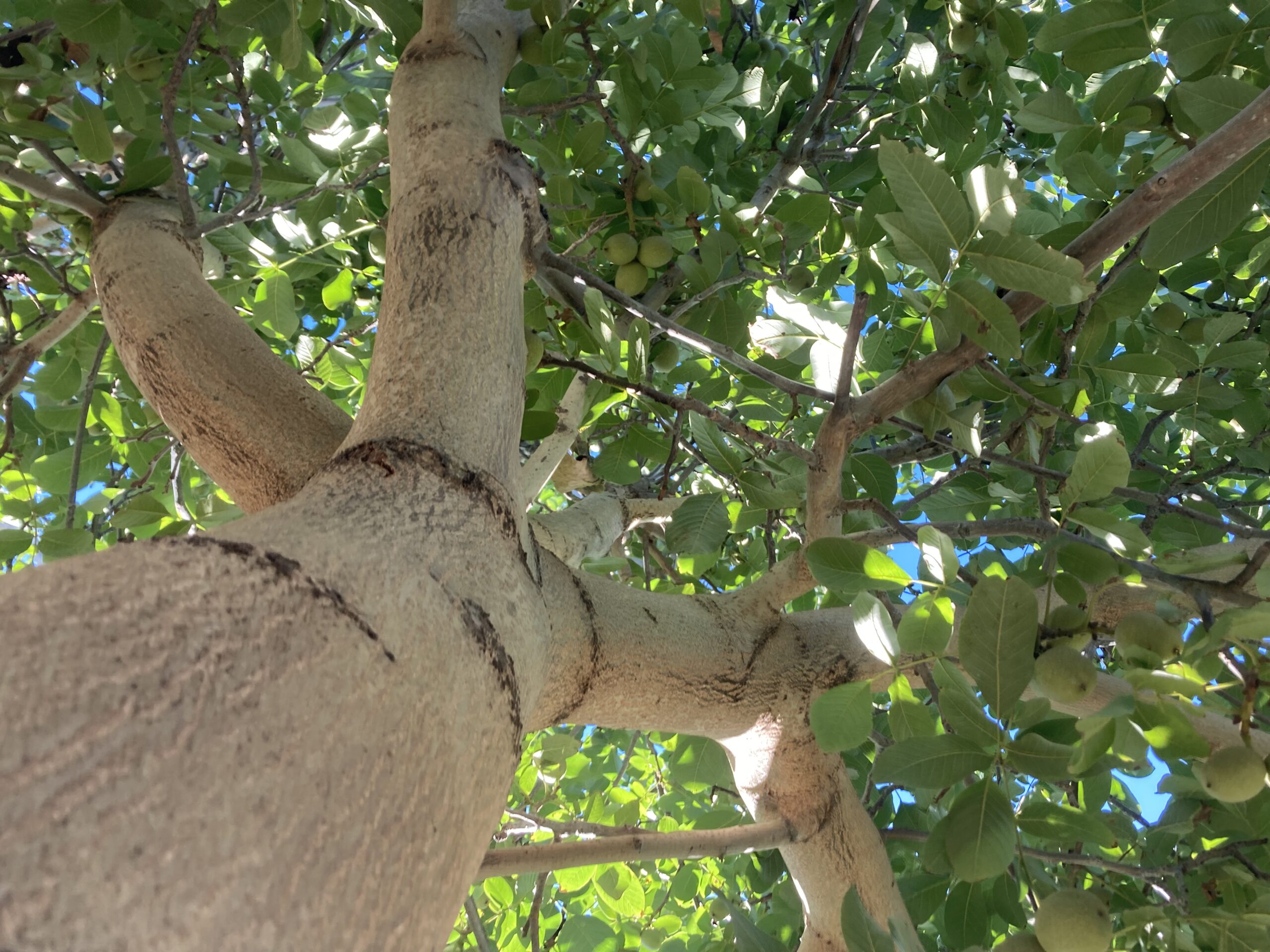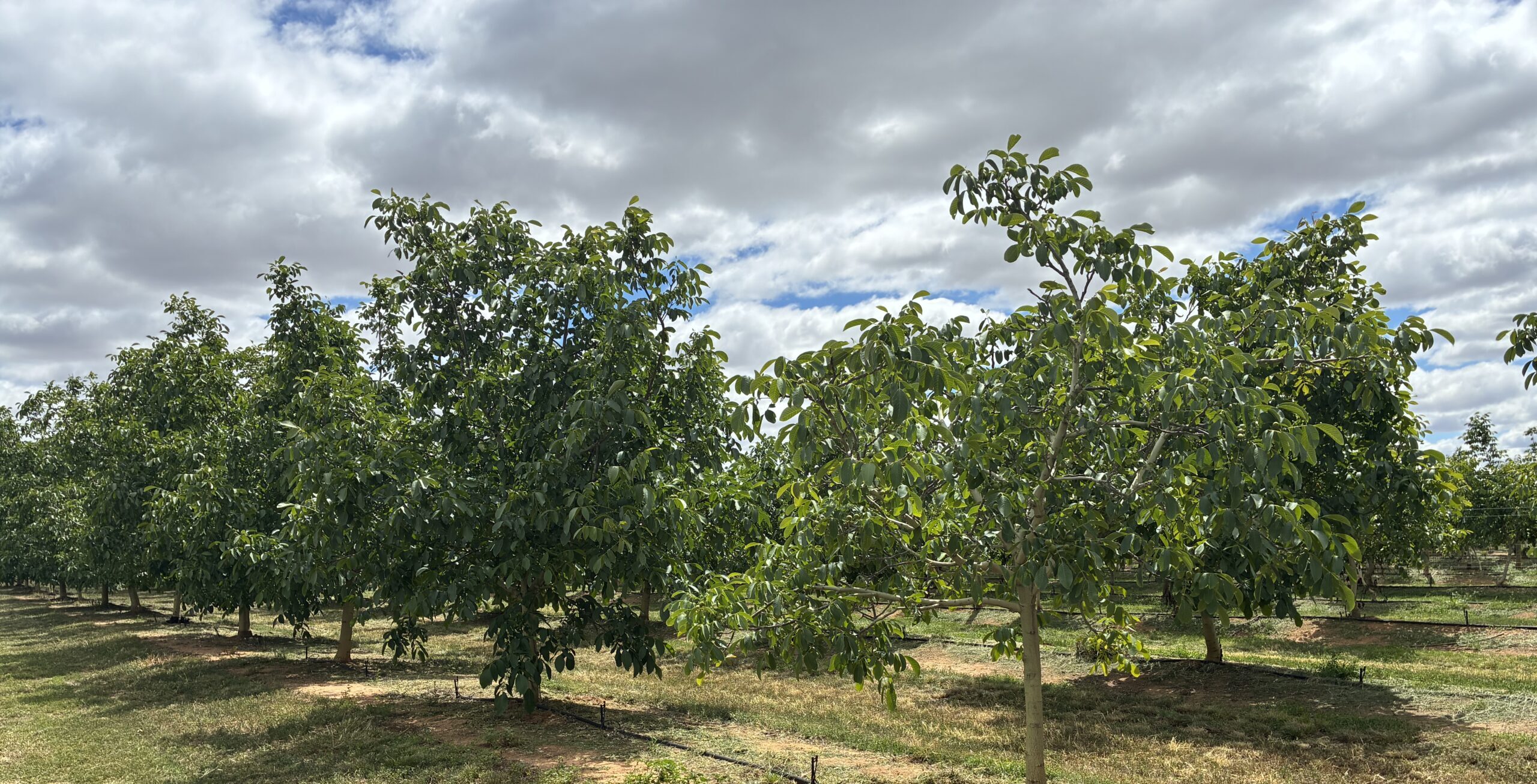
Spring marks the start of a new growing cycle at Imatech Nut Trees, as the walnut orchard moves from winter dormancy through budburst, flowering and early crop development.
A new season begins
Walnut trees are deciduous, so the orchard changes quickly once winter dormancy ends. Buds begin to swell, new leaves emerge and the trees return to active growth. Chandler and Tulare trees do not always move at exactly the same pace, and development can vary across the orchard with position, soil moisture and seasonal conditions.
This is an important monitoring period. Early observations help the orchard team understand how evenly the trees are progressing and where attention may be required. Spring does not determine the final crop on its own, but it establishes the foundation for the months of growth that follow.
Flowering and early crop development
Flowering is one of the most important stages of the walnut season. The timing and overlap of pollen release and receptive flowers influence fruit set, while wind and weather conditions can affect how the orchard progresses. Careful observation is particularly important because changes can occur over a relatively short period.
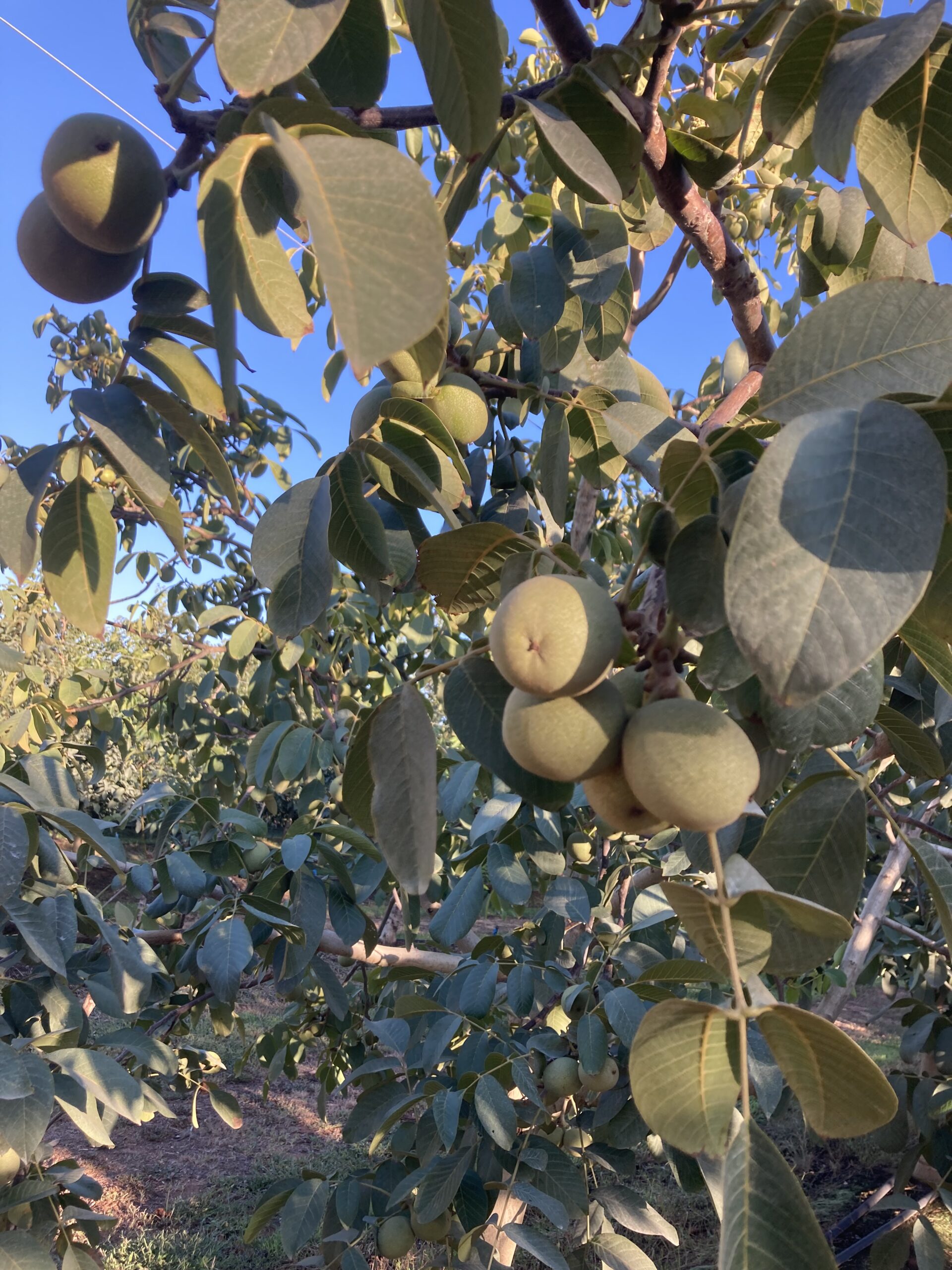
After successful pollination, the developing nuts become visible and begin their long path towards maturity. Not every flower will become a marketable walnut, and seasonal conditions continue to influence the crop. The focus at this stage is on supporting healthy, balanced growth without making assumptions about final yield or grade too early.
Water, soil and tree nutrition
Spring growth increases the trees’ demand for water and nutrients. Imatech Nut Trees manages a 300-acre orchard near Shepparton, where deep, sandy soils provide good drainage and irrigation supports production through the growing season. Watering decisions need to reflect soil moisture, tree demand and current weather rather than a fixed calendar.
Tree nutrition is managed with the same discipline. The aim is to support leaf growth, canopy development and the forming crop while maintaining the longer-term health of the orchard. Regular monitoring provides a better basis for decisions than applying the same treatment across every block regardless of condition.
Managing orchard health
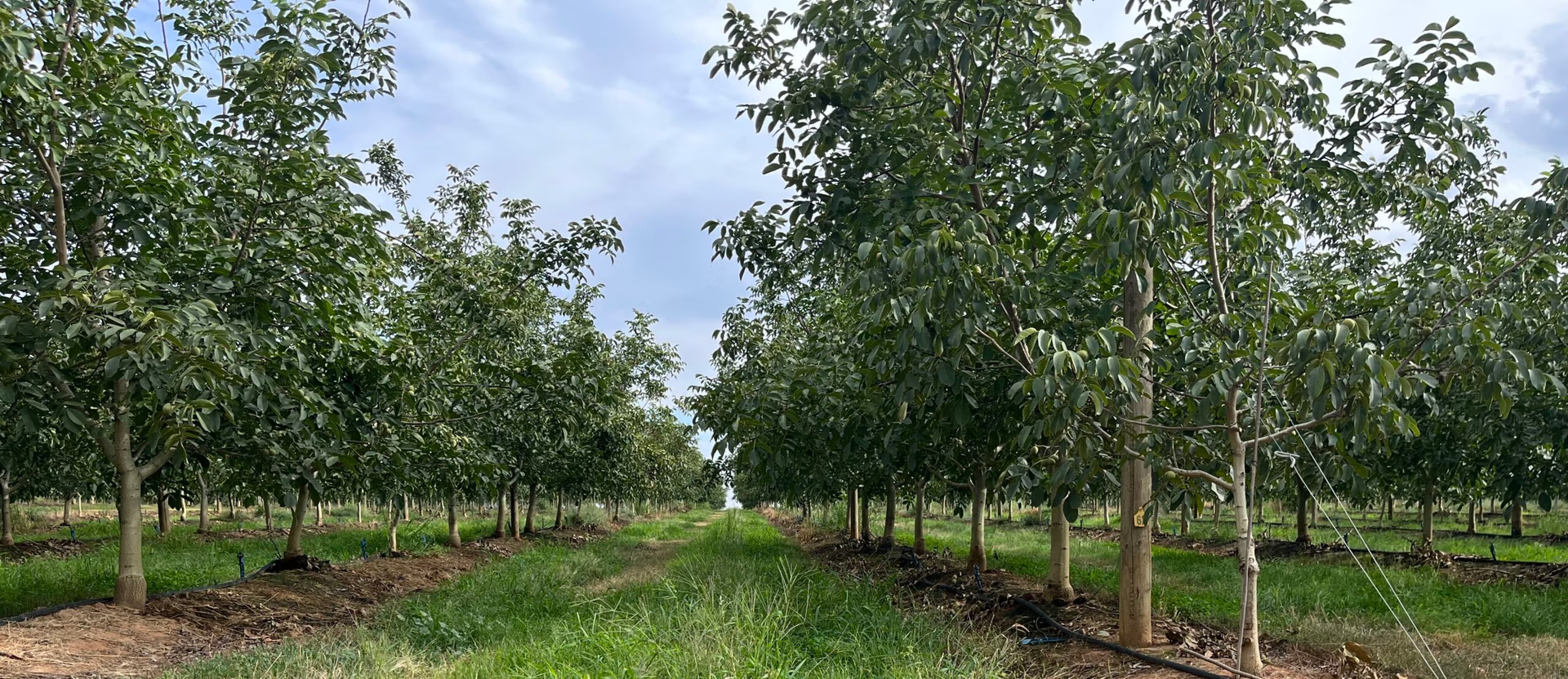
Fresh spring growth requires close attention. The orchard is monitored for signs of pest pressure, disease, uneven growth and other conditions that may affect the trees or developing crop. Where action is required, timing and application need to suit the identified issue and the conditions at the time.
Canopy management is also part of building a productive orchard. Good structure supports light movement, access and future harvesting while allowing each tree to develop appropriately. This work is part of a long-term approach; walnut trees mature over many years, so each season contributes to future as well as current production.
Spring work supports autumn quality
The characteristics buyers value at harvest – sound shells, consistent sizing, good kernel development and clean flavour – are influenced by the whole growing season. Spring is the beginning of that process. Summer growth, weather, harvest timing, drying and grading will all play their part before the walnuts are ready for market.
Imatech Nut Trees grows Chandler and Tulare walnuts, with more than 22,000 maturing trees planted since 2017. As the orchard develops, seasonal monitoring and careful post-harvest handling remain central to producing a dependable Australian-grown product.
Planning for the coming harvest
Spring is also a useful time for wholesale buyers, food manufacturers, retailers and distributors to begin discussing future requirements. Early conversations can cover preferred varieties, in-shell sizes, kernel requirements, packaging, indicative volumes and delivery timing. Availability remains subject to seasonal outcomes and final grading after harvest.